From Soft Goat Undercoat to Luxury Garment
Cashmere is among the most preferred luxurious fibers in the world as it is smooth, warm, lightweight and delicate. However, it is not until it becomes a scarf, sweater, shawl or wrap that it takes a painstaking tour through the Secret Way of the mountain goats to the fine art of textile finishing. Knowing how cashmere is produced enables customers to see why genuine cashmere is a higher-priced item compared to regular wool and why quality relies on all the steps of production.
The entire process has been commonly referred to as a goat to garment process. It involves harvesting, sorting, cleaning, de-hairing, spinning, weaving or knitting, washing and finishing. Every process influences the softness, life, warmth and look.
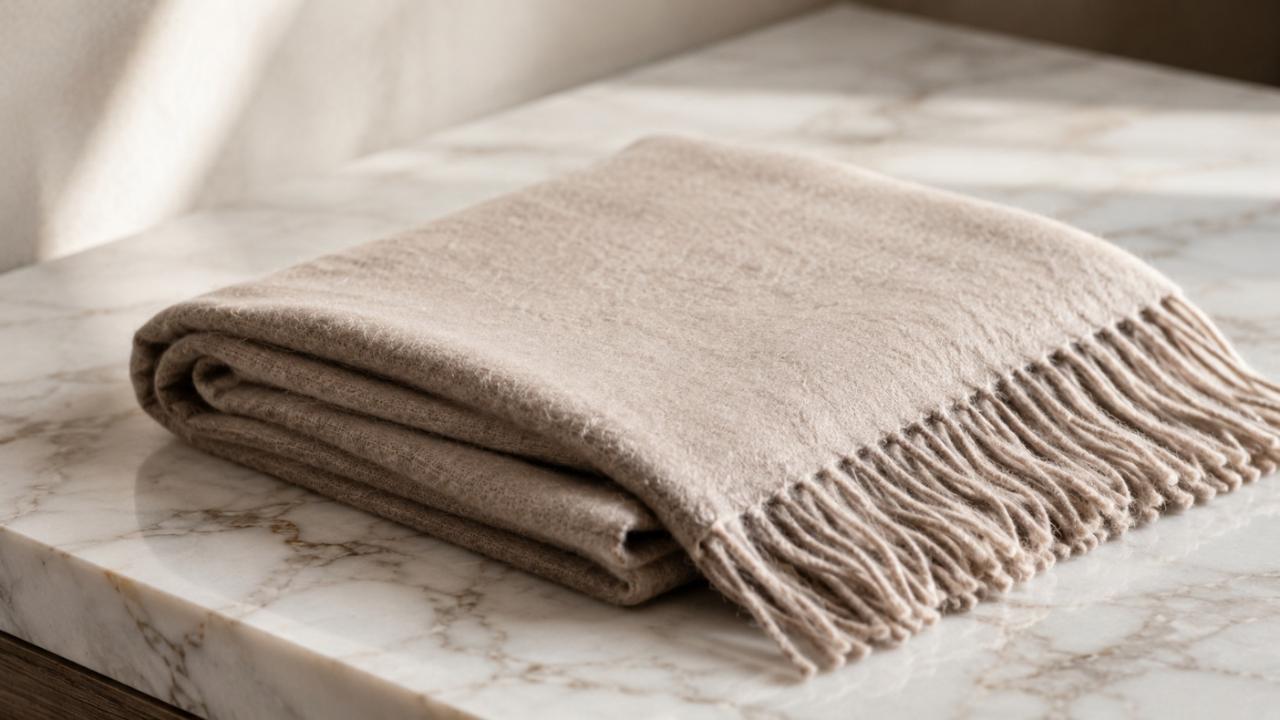
1. Cashmere Begins with the Goat
Cashmere is made out of fine soft undercoat cashmere-goats produce. These goats develop an inner coat when it is cold to shield them against bad weather. This undercoat is thinner than the ordinary sheep wool and that is why cashmere is softer to touch.
Goats will now learn to moult this undercoat as the spring approaches, and the weather is warmer. This is the ideal time for collecting the fiber. It is carefully shielded such that the soft down is separated as much as possible in collecting the best cashmere, with the thicker outer hair.
2. How Cashmere Is Harvested
Harvest is the most important step. There are two common methods: combing and shearing. This technique has the ability to affect the cleanliness, the softness and quality of the raw fiber.
The goat in a traditional harvesting is combed with the natural shedding season. A loose undercoat comb is used to brush off loose undercoat without cutting the outer coat. This technique is less efficient and tends to yield a cleaner, finer fiber as the down that falls and is sweetened down is selected.
Shearing is quicker since the whole coat is sheared at a time. But it does collect the fine undercoat, along with the coarse guard hairs. It indicates that additional segregation is in the future. This is why cashmere combing vs shearing is a significant discussion of quality. Premium cashmere is typically preferred to be combed as it may aid in the maintenance of the length and softness of the fiber in its natural state.
3. Sorting the Raw Cashmere
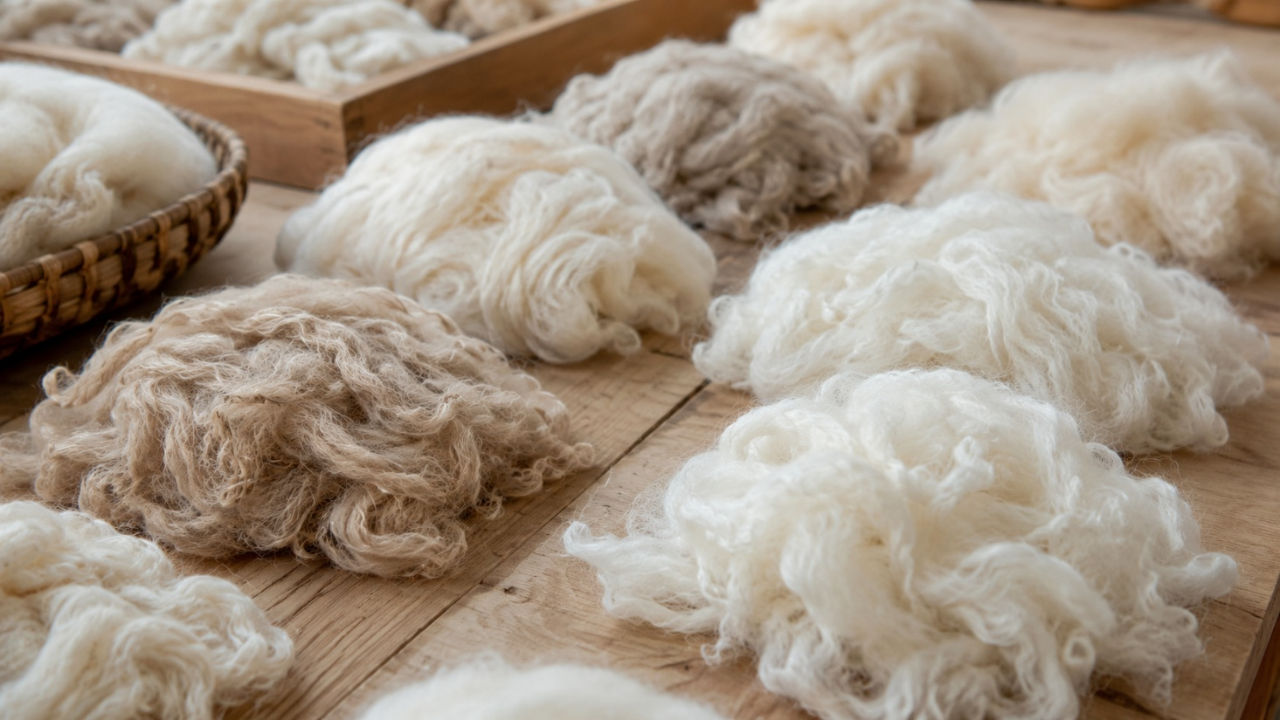
The raw fiber After picking, the raw fiber is either sorted manually, or with the assistance of trained labor. Sorting will eliminate noticeable contaminants, like dust, vegetation, coarse hair and inappropriate fibers. The fibre can also be differentiated using colour, length and fineness.
Commonly, in natural cashmere, there is colorings in white, grey, brown and beige. White cashmere can be very expensive since the colour can be easier to change to a lighter shade. But there is also an appreciation of natural darker colors with their natural and natural appearance.
Tedious yet significant process in the production of cash is sorting. Bad sorting results in coarse texture, uneven yarn and reduced longevity. The sorting of good quality assists in the assistance of only the soft and the best fibers passing on.
4. Washing and Scouring
Raw cashmere contains dust, natural oils and outdoor particles collected from the goat’s environment. Before it can be spun into yarn, it must be washed through a process known as scouring.
Scouring does not destroy the fine structure of the fiber. The intention is to clean but retain the natural softness. When the washing is too rough, then the fiber may be weak or dry. Unless it is washed adequately, there may be still some impurities left and it will contaminate the final fabric.
This step is a preparation of the cashmere to be de-haired (removed) which is one of the most significant technical processes in transforming the raw fiber into luxury material.
5. De-Hairing: Removing Coarse Guard Hairs
The hair of cashmere goats (two hairs) is the inner down that is soft and the outer guard hair, which is rougher. The inner pollution is employed in a fashion coat, and the rough guard hair has to be shaved off.
De-hairing is a process of separating finely stranded cashmere that off-loads the unnecessary rough fibers. This could be accomplished through purpose-specific machines which exploit the variations in fiber length, thickness and weight. The more the de-hairing is clean the smoother the finished yarn will be.
It is one of the reasons why real cashmere is soft and smooth. When excess coarse hair is left, it might make the garment itchy, heavy or rough. High quality manufacturers are keen with this step since it is a direct impact to comfort.
6. Spinning the Fiber into Yarn
When de-haired, the clean cashmere fibers are then prepared to be spun into cashmere yarns. The loose fibers are twisted to form one continuous thread through spinning. The yarn is to be made as thick and twisted depending on the end product.
Lightweight scarf and delicate sweaters may be made out of fine yarn. Fatter yarn can be employed on the colder winter clothing. Certain yarns are woven as single; and others are twisted in pairs, or more, to add strength and structure.
Best spinning should be moderately soft and strong. Pilling or giving shape easily may occur when the yarn is over spun. When it is twisted too tight it might not be so soft. Skilled spinning creates yarn that is soft, strong and suitable for long-term use.
7. Weaving or Knitting the Garment
The yarn is ready and may be woven or knitted. Shawls, scarves, wraps and stoles are frequently made out of woven cashmere. Sweaters, cardigans, hats and gloves made of cashmere are frequently knitted.
In weaving, strands of a thread are interwoven on a loom to give a smooth fabric. Cashmere can also be handwoven, and may contain minor natural variations, adding character and a touch of artisanship. Machine weaving is more consistent and faster particularly with large-scale production.
During knitting, loops of yarn are connected to form stretch and elasticity. This renders cashmere knitted to be comfortable in tight clothing and winter coats.
8. Washing, Finishing and Quality Checking
Once woven or knitted, again the fabric or the garment is washed to enhance texture and eliminate leftover processing residue. They can also be brasshed, steamed or pressed to obtain the end softness and shape.
It is in finishing that the garment starts to appear and feel luxurious. A high-quality cashmere finished product must be soft without feeling loose, warm without being too heavy, smooth without being oily. Quality teams can inspect about lumpy colour, loose thread, holes, high pilling risk and measure properties.
It is upon completion of these checks that the cashmere product is now labelled, packaged as well as sold.
Why the Process Matters
The goat to final product journey is tedious, painstaking and artful. Each process influences the overall quality of the end product. Ethical harvesting safeguards the animal. Sorting enhances the softness. De-hairing properly removes coarse hair. Better yarn is the result of skilled spinning. The overall beauty and comfort of the garment is provided by expert weaving or knitting.
That is why the true cashmere is not only costly due to the brand name. It is precious since it involves the uncommon raw material, perseverance and technical expertise. Once you know the process of creating cashmere you can better detect quality and pick a piece that feels great, lasts longer and looks more of an artisan piece.