How Pashmina Is Made in Nepal
The pashmina woven by Nepal is appreciated in the global market due to its softness, warmth, lightness, and traditional workmanship. It takes careful preparation and skilled labour to convert fine cashmere fibre into a finished shawl, scarf, sweater or wrap. The knowledge of this process will guide the customers to appreciate well-made pashminas.
Pashmina is not just a luxury fabric in Nepal. It symbolizes Himalayan raw materials, artisanal knowledge and traditional weaving techniques. The use of modern technology in production, however, does not mean that masterful artistry is not paramount to high quality products. As one of the major Nepalese cashmere brands, ND Cashmere, the Navadurga Cashmere links this history with the current trends in the market production through expertly crafted and tailor-made collections to customers and corporations in over 70 countries.
From Fine Fibre to Yarn
The process begins with the fine undercoat of mountain goats, collected during the natural shedding season. Raw fibre can have coarse guard hair, dust, natural oils, and particles of plants and is therefore to be sorted and cleaned. The loose fibre is then detached of the coarse outer hair since excess coarse fibre would render the end product heavy or scratchy.
The fibre chosen is twisted into thin thread. In the past, spinning was done manually and was tedious and time consuming. Specialised machinery could enhance uniformity and weave or knit soft, tough, thinly-spun yarn today.
Quality at ND Cashmere starts with the choice of materials and extends to the processing of yarns, design, weaving, knitting, finishing and inspection. This will assist the business in developing products that would capture the Nepalese crafts without compromising the international standards.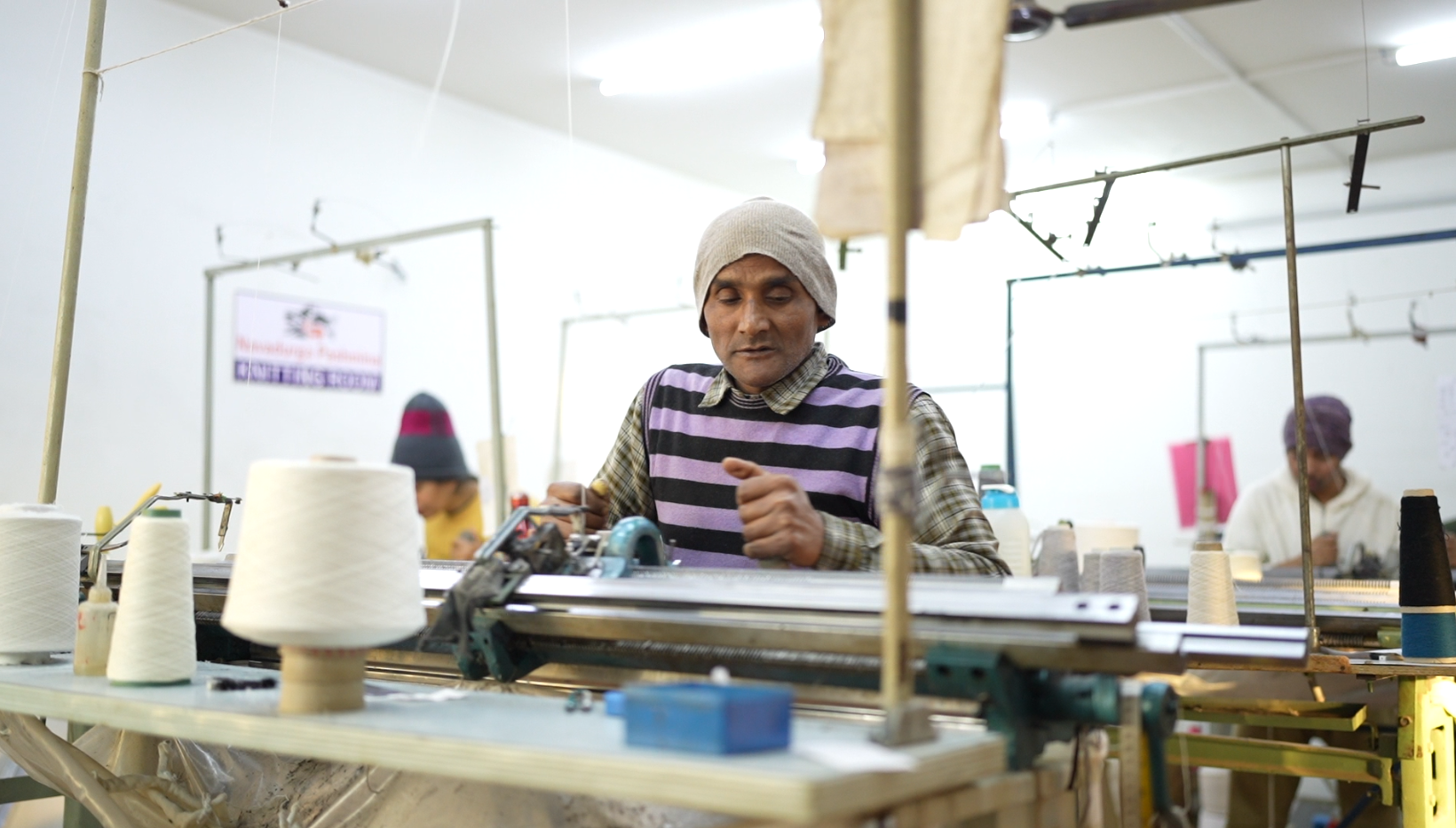
Pashmina Making Step by Step
The primary steps are simple. Very thin strands of cashmere are gathered, washed and filtered and then the soft undercoat is pulled off the coarse guard hairs. This fibre is then turned into yarn and is woven with the use of a handloom or power loom and knitted into the desired product. Lastly, the cloth is washed, smoothed, molded, inspected and made for sale.
Quality is influenced by each step. The choice of fibre: a bad selection of fibres can decrease softness, weak yarn can influence the durability, and inconsistent weaving can alter the shape and the shape of a shawl. Poor quality pashmina is thus, not the fault of the type of loom applied, but the whole process of production.
Traditional Handloom Weaving in Nepal
Traditional pashmina production in Nepal is closely linked with handloom weaving. Artisans prepare the loom, arrange the warp threads, and manually guide the weft yarn through the fabric. The slower process gives the weaver greater control over texture, pattern, and appearance.
The pashmina that is handwoven tends to have a unique nature. One can find small variations in the weave, however, in the case of a smooth and professionally finished fabric, they are not always defects. Rather, they are capable of signifying the human handiwork behind the product.
ND Cashmere maintains this link between the past and current design by the production of goods that appreciate the art of craftsmanship as well as those products that address the needs of modern customers. In its Art of Weaving collection, one can trace how the traditional Nepalese textile knowledge is still reflected in the contemporary pashmina making process.
Handloom vs Power Loom
A handloom is one that is manually operated by an artisan where a power loom can be used in order to create fabric faster and in a more striking manner with the help of mechanical or electricity. The handloom is slower, more labour-intensive but it gives more scope to the artisans and can also provide a more personalized result. Power-loom manufacturing will favor increased order quantities, steady sizing, and reduced manufacturing hours.
Both of them are no better or worse. A hand-woven object may become poor when it is woven using a poor yarn or a poor finish over the piece whereas an object woven using machine may be excellent when it has been woven using a good material and when proper standards are considered. Those customers who are interested in heritage and hand-made elements, can choose to use handwoven, whereas consistency, availability, and affordability are more important to those who it should be with machine-made.
Being one of the manufacturers that provide products to retail, wholesale, and global markets, ND Cashmere balances between classic knowledge and cutting-edge production power. Its services of B2B and custom-order help in serving its businesses that want Nepal-produced products in own designs with higher number.
Finishing and Quality Checking
After weaving or knitting, the product may be washed, softened, brushed, steamed, pressed, or shaped. Fringing can be done by hand finishing, loose strands are pulled off and colour change, broken weaving, or weak ends can be checked.
The quality checking must be done since softness is not the only criterion of a premium product. Standard features such as size, weight, coloured balance, consistency in weaving, and finishing have to be measured as well. A pashmina must be soft, warm and yet lightweight, comfortable, durable and shaped.
Final Thoughts
Understanding how pashmina is made explains why Nepalese pashmina is valued worldwide. The steps involved are fibre collection, cleaning, separation, spinning, weaving or knitting, finishing and quality checking. The handloom production implies the handicraft and textile tradition, whereas modern techniques favored uniformity, productivity, and global supply.
Navadurga Cashmere, through decades of experience, keeps to relate the traditional Nepalese craft with contemporary design. Once the fine materials, expert handling and thorough finishing mix, pashmina is not only a luxury fabric but a lifetime to pass on to speak of the Nepal tradition on the textile craft.
This version is journalistic in nature with a natural relevance to ND Cashmere to its history, manufacturing process, product assortment, weaving assortment, and B2B service offerings.