Cashmere Fiber Processing: From Raw Fiber to Luxury Yarn
Cashmere is known to be soft, warm, light and luxurious. But it is not only the raw fiber that creates the beauty of the final product. It is the product of a minute process of washing, peeling, shredding and spindling the delicate under-wrought. This process is referred to as cashmere fiber processing and this is part of the primary reasons why true cashmere does not feel like regular wool.
It starts with the collection of the soft undercoat of goats that produce cashmere. At this farm level the fiber is raw. It can have harsh hair, dust, natural oil, plant particles and varying lengths of the fibers. It will undergo various significant processes to become a shawl, sweater, scarf or wrap and they include sorting, washing, de-hairing, combing, spinning and finishing.
Sorting the Raw Cashmere
Sorting is the first process following harvesting. Raw cashmere is quality checked in terms of colour, length, softness and cleanliness. The natural cashmere may come in the form of white, grey, beige or brown. White fiber is also appreciated due to the ability to be dyed a broader variety of colours, and natural colours are also popular because of their natural and natural look.
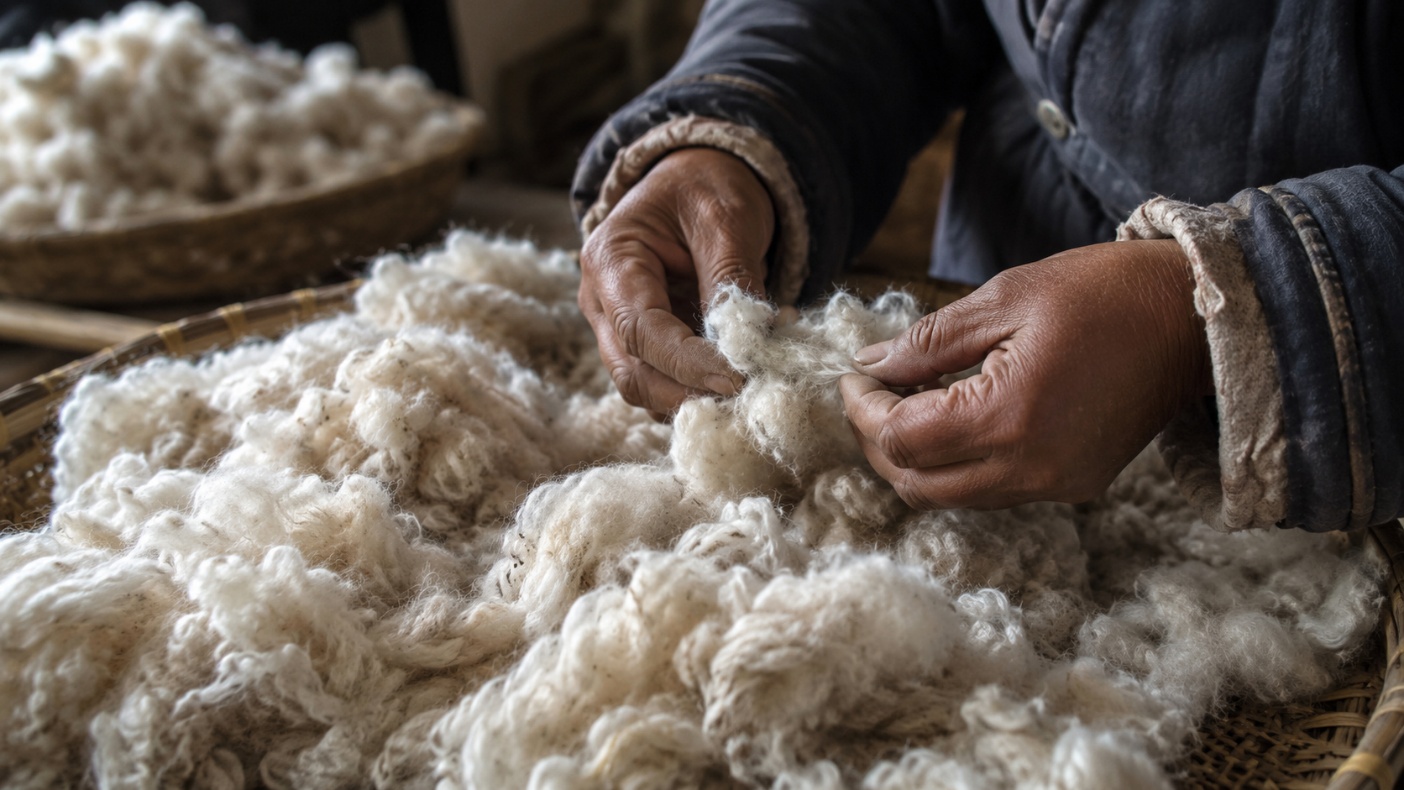
The sorting process removes conspicuous impurities, and isolates finer rougher material. This is a critical step in which time should be patient since improper sorting may lower the quality of the resulting yarn. When rough or short fibres are put in with the fine fibre, the finished fabric will feel rough, bumpy or loosely made.
Sorting will preserve the natural fiber value. It also makes ready the material to wash and to be technologically cleansed.
Cleaning and Scouring
Cashmere is first removed from a state of rawness and then it is washed. This cleaning is commonly referred to as scouring. It gets rid of dust, grease, sweat and other particles that gather on the clothes of the goat and the outdoors.
Washing very delicate. Cashmere fibers are delicate and soft and thus they can be ruined with treatment. It is intended to wash the fiber in a correctly purified form without losing softness, airiness and structure of the fibers.
The fiber is dried after washing. Separating and spinning on clean fiber is simpler. Unless the fiber is washed properly, it can be contaminated with dirt and oil, which will influence the yarn, the colour and ultimate texture of the garment.
De-Hairing Cashmere
De-hairing cashmere is one of the most crucial steps. The coat of a cashmere goat has two primary components, the under coat is smooth inside and the outer guard hair is rough. The luxury garments are made of the fine undercoat. The guard hair is coarser, and should be rubbed off.
In de-hairing, soft and coarse hairs in cashmere are separated. This can be accomplished by specialised machines which act with variations of fiber thickness, weight and length. The aim is to retain the soft down and discard the course fibers that result in itchy and heavy fabric.
This phase specifically impacts quality. In case there are several guard hairs left over, the end product will not be smooth. When the process is heavy-handed some fine fiber that is valuable can be wasted. Nimble de-hairing provides the production of a superior compromise between softness, purity and usability.
Combing Cashmere Wool
The term I wore is a mixture of cashmere wool; however, cashmere is supposed to be the undercoat of goats, not sheep wool. During textile processing, the process of combing aids in aligning the yarns in order to convert them into neater and uniform yarn.
The use of combing gets rid of tangles, the rest of the impurities and fibers that are extremely short. It also places the fibers in a more even direction. This is what refines the yarn and assists in enhancing the end texture of the fabric.
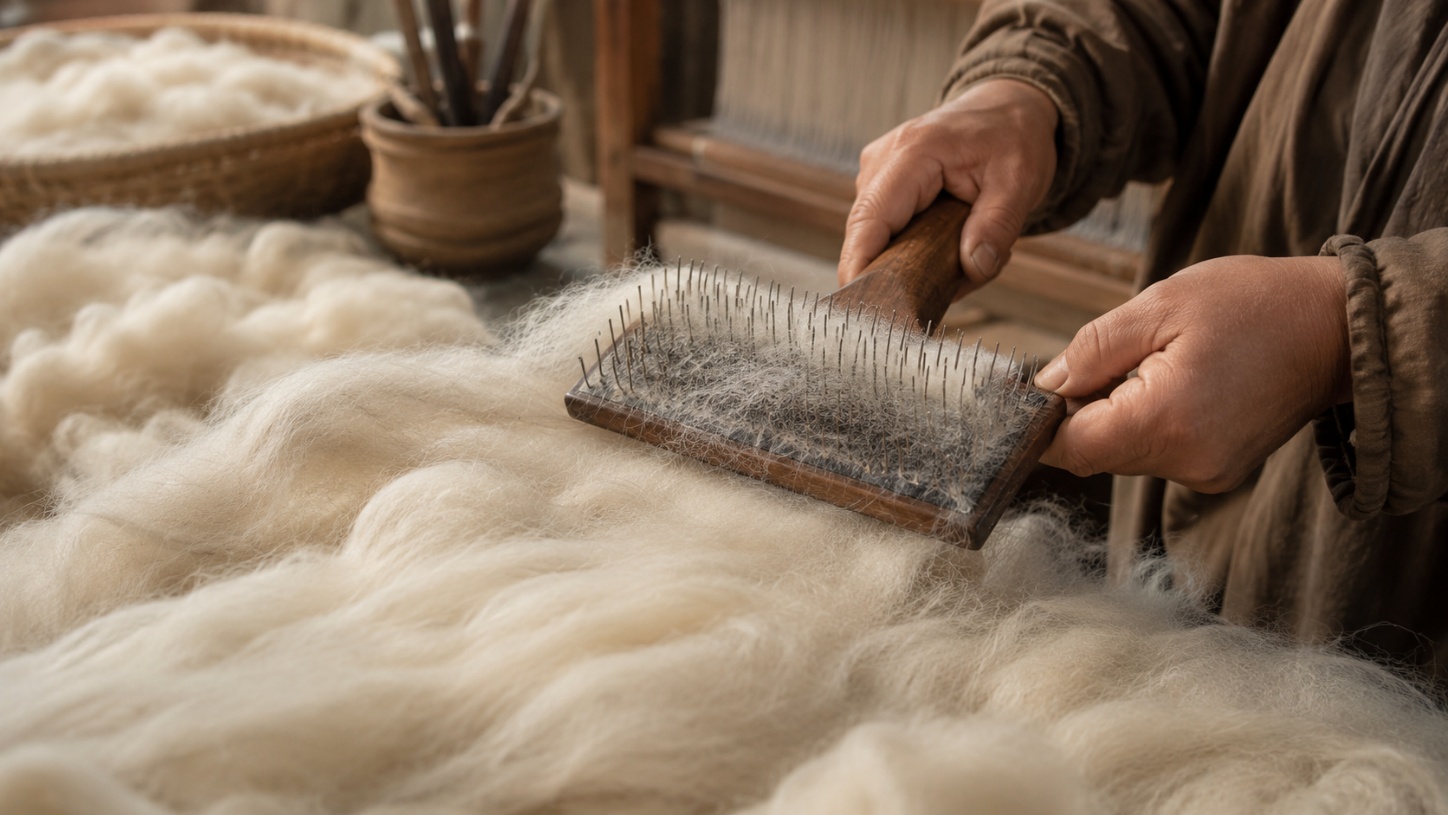
It is worthwhile to know that there is the use of the term combing which can signify two things. To begin with, goats can be sheared at harvest time to remove loose undercoat at shedding time. Second, fiber is washed, then can be tightened by combing before spinning. The two steps complement each other and occur in varying levels.
Carding and Fiber Preparation
The fiber can also be carded prior to spinning. Carding differentiates and separates the fibers into a loose, thin web. This facilitates the spinning of the material since it eliminates clumps and gives a more balanced flow of the fibres.
Fibers are carded to produce yarns that are soft, warm yet to some extent airy. Snarled fibers can be used to create more smooth and elegant yarns. This decision is based on the end product. A lightweight scarf might demand a different form of yarn as compared to a bulky winter scarf.
This step demonstrates the technical and artistic nature of cashmere production. A single raw material will be different fabrics depending on the manner of preparation.
Cashmere Yarn Making
Once it has been cleaned and stripped of its hair and aligned to a single fibre, it is now cashmere yarn. The looseness of the fibers is twisted together in a continuous thread by spinning. This thread can be subsequently woven or knitted into a fabric.
The amount of twist is very important. Too loose twisting: This may result in a weak and easily pilled yarn. When it becomes too knotty, it could become harder and less tactile. An effective spinner produces fine, powerful and pliable yarn.
The thickness of the yarn influences the end product. Light shawls, scarves and knit wear- Fine yarn is appropriate. Warmer sweaters, cardigans and winter accessories are done with a heavier yarn. Certain yarns are single-ply with others being two-ply or four-ply to provide extra strength and structure.
Why Is Cashmere So Soft?
The question many would pose is, why is cashmere such a soft wool, why not just any other wool? The solution starts with the diameter of the fiber. Cashmere is a fine undercoat and also the fibres are very thin compared to most of the wool fibres. Finers are lighter fibers that are more inclined to bend around the skin making a much smoother touch.
Processing also matters. De-hairing should be done properly to take away the rough hair on the guards. Unevenness is minimized with a careful combing or carding. Spinning expertise is able to keep the yarn soft and to provide it with sufficient strength. Soft finishing will enhance the fiber texture without leaving the surface damaged.
This implies that cashmere comfort is a blend of nature and handiwork. The true quality lies on the handling of the raw material at each level.
From Raw Cashmere to Finished Product
After spinning, the processing of raw cashmere into a finished product starts. When yarn is prepared it may be woven with to form shawls, wraps and scarves, or knitted into sweaters, hats, gloves and types of cardigans.
Once weaving or knifing is completed, then a garment is washed and completed. The process of finishing can involve steaming, brushing, pressing or shaping. This last step enhances feel, appearance and fit of the product.
Checking of quality is a must also. The manufacturers can examine the fabric according to the following criteria: loose threads, irregular colouring, holes, weak seams, inaccurate measurements or too much fuzz. A high-quality cashmere object must be soft to touch, appear elegant and can retain its shape when taken care of.
Why Processing Quality Matters
Cashmere is a one-of-a-kind that is not necessarily high quality. A cashmere product that has not been well processed could initially be soft, but lose the shape, or greatly pill after wearing or become rough. The quality processing assists in producing a product of better quality which is soft, durable and comfortable to last longer.
People just seek labels like 100 percent cashmere but the procedure of the label is equally as important. Performance is affected by fiber length, de- hairs, yarn twist, ply and finishing. A good one must be comfortable with a warm, soothing, and graceful look and feel lightweight and firm.
Final Thoughts
Cashmere is made superb with hard labour. It takes sorting, cleaning, de-hairing, combing or carding, spinning and finishing to make a beautiful garment out of the fiber. Every process safeguards the rawness and worth of the raw material.
Knowledge about processing cashmere fiber makes customers understand how cashmere is prepared, and how people value the process. It is also more manageable to evaluate quality and select items that are comfortable, appear gracefully and may last when well taken care of.