What Is Cashmere Made Of?
Cashmere is produced using the fine, soft hair type that is produced by special goats that produce cashmere. These are not normal hair of the outer part of the animal’s coat. Rather, they are adapted to the warm inner coat which keeps goats warm in cold mountainous weather. This fine undercoat is what makes cashmere famous because of its softness, warmth and lightweight.
In layman terms the answer to the question What is cashmere made of is end, cashmere is made of the very fine down of goats, painstakingly gathered, washed, stripped of all their hair, spun and woven or knitted into elegant clothing. The quality of end product is determined by the fineness, length, purity and processing of this raw material.
Cashmere is commonly referred to as one of the cosiest natural fibers in the planet since it incorporates warmth with smoothness in a manner that is gentle to the skin. True cashmere is lightweight, unlike other heavier wool fabrics but it still makes a great insulator.
Where Does Cashmere Come From?
Numerous individuals pose the question of origin of cashmere since the term does not sound like an animal fiber but rather similar to a name of a fabric. Cashmere is first named after Kashmir, an ancient state, which is linked with best shawl-making practices. Money has been manufactured today in some cold and mountainous areas where goats naturally produce a soft under layer to endure the cold winters.
Places that have major cashmere production include Mongolia, China, India and some parts of the Himalayan belt. Cashmere and pashmina in Nepal is related to Himalayan craft. The weather matters since goats grow the insulating fibres finer when in cool atmospheres.
The rough fibre is normally harvested during spring, when goats naturally start to shed their winter coat. This is a seasonal harvest that puts cashmere in the shade in comparison with sheep wool, which is a mass production.
Cashmere Goat: Chyangra and Changthangi
Cashmere is produced by special breeds of goats which grow fine undercoat fibers. The names that are commonly spoken in the context of the Himalayas are: Chyangra and Changthangi.
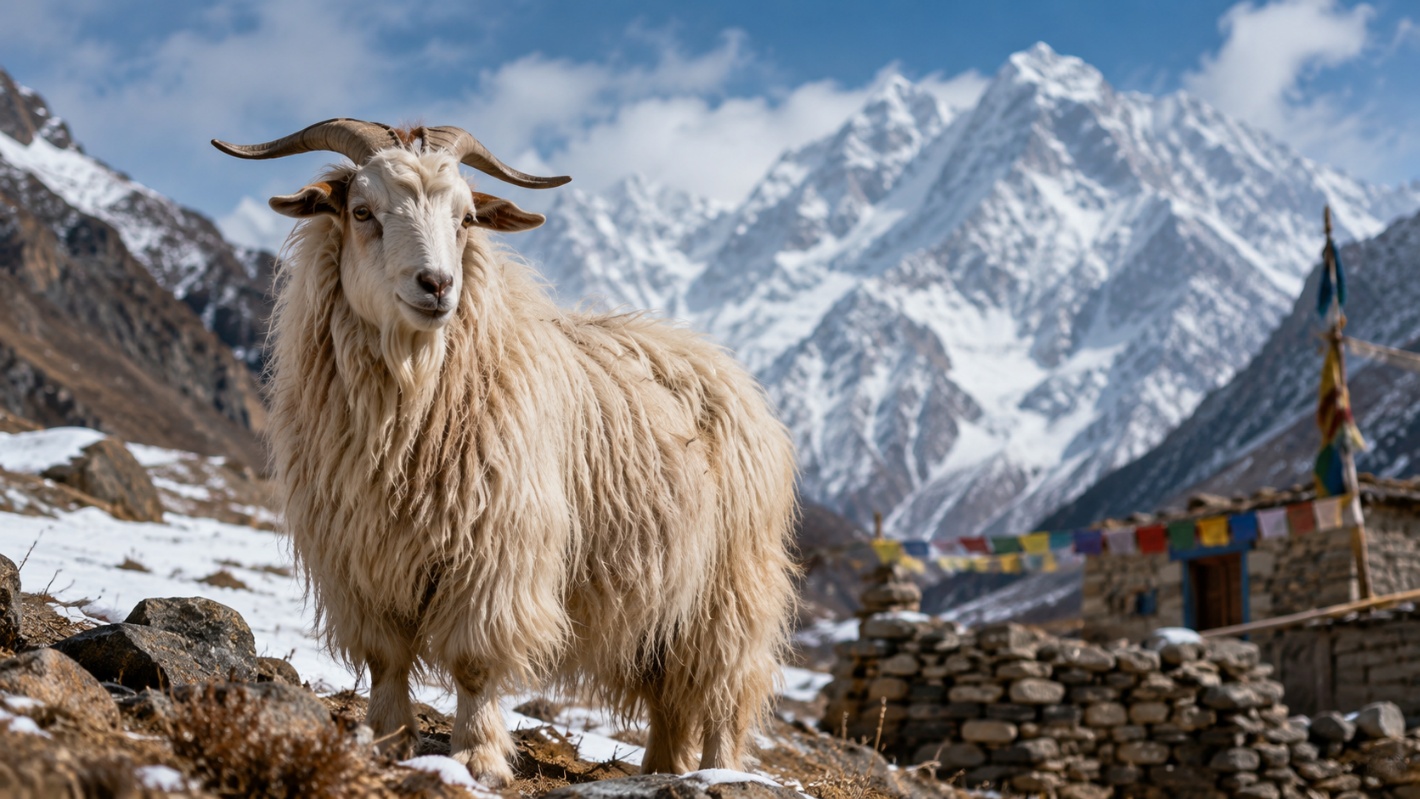
Nepal has a Himalayan pashmina culture that is linked to the Chyangra goat. These goats inhabit mountainous regions, and develop warmer inner coats that are appropriate to icy mountain climates. Premium Nepali pashmina and cashmere items are made with the fine undercoat.
The Pashmina goat or Changthangi goat is native to the Ladakh region, in India. It is reputed to have small fibers that can be like pashmina shawls and can be used in fine textiles. The two types of goats BOTH Chyangra and Changthangi are valued as the undercoat fibres are soft, warm and naturally fine.
Nevertheless, one should know that not all the goats are capable of producing cashmere fiber. The fiber should be of fine quality and standard. That is why true cashmere items do not solely depend on the source of the fabric, but it is also strongly related to the selection, and its processing.
Understanding Cashmere Fiber Micron Count
Cashmere fiber micron count is one of the most crucial quality measures of cashmere. The diameter of a fiber is measured in microns. A micron is a millimetre divided by a thousand. In textiles, the lower the micron count the finer and softer is the fiber.
The Cashmere and Camel Hair Manufacturers Institute defines cashmere as fine, de-hared, undercoat hair on cashmere goats, and a diameter of the fibers can not be greater than 19 microns. This technical definition can be used to distinguish between a real cashmere and rough fibers.
Fine cashmere is usually in the range of 14 to 16 microns and large commercial cashmere might be within the range of the upper acceptable limit. Very fine fibers are also softer and smooth on the skin, but it is not just the number of microns that is a consideration of quality. The length of fiber, its strength, purity and spinning are also important.
A fabric composed of finer, yet extremely short fibers can seem smooth or even somewhat soft initially, but can pill very easily. An excellent product must be fine as well as long enough in fiber in order that the yarn will be able to maintain itself.
Why Is Cashmere Called “Soft Gold”?
Cashmere is also referred to as soft gold; this is due to being rare, expensive and exceptionally soft. The words emphasize the fashionability and unavailability of the material as well. Every goat generates no more than their portion of usable undercoat in one year, and large portions of the raw fleece are stripped off in the course of cleaning and de-hairing.
The process of turning raw fibre into a finished garment is labour intensive. The fiber requires harvesting, sorting, washing, de-haired, spinning and finishing. These processes are time and expertise consuming and more so where the objective is to bring about a soft product, durable and genuine cashmere product.
The latter meaning of the soft gold is not, then, price only. The emotional worth of the fabric, its coziness, its comfort, its warmth and its links with craftsmanship are also mentioned. Quality cashmere scarf or sweater is usually regarded as an investment and not a fashion accessory.
Cashmere Wool vs Sheep Wool
Comparison of cashmere wool and sheep wool applies well since they are both animals and naturally derived fibers, unlike animals; they are not the same and to the touch.
Sheep wool is the products of sheep fleece. It is highly marketable and utilized in sweaters, coats, blankets, suits and on numerous other fabrics. Sheep wool may be coarse sheep, medium or very fine depending on the type of sheep. An example of such softer sheep wool is merino wool.
Cashmere, on the other hand, is made out of the fine undercoat of goats. It is typically lighter, warmer and runner in weight compared to ordinary sheep wool. This is due to its fine fiber diameter, and natural insulating structure. The fibers of cashmere are good at trapping warmth though breathable and soft.
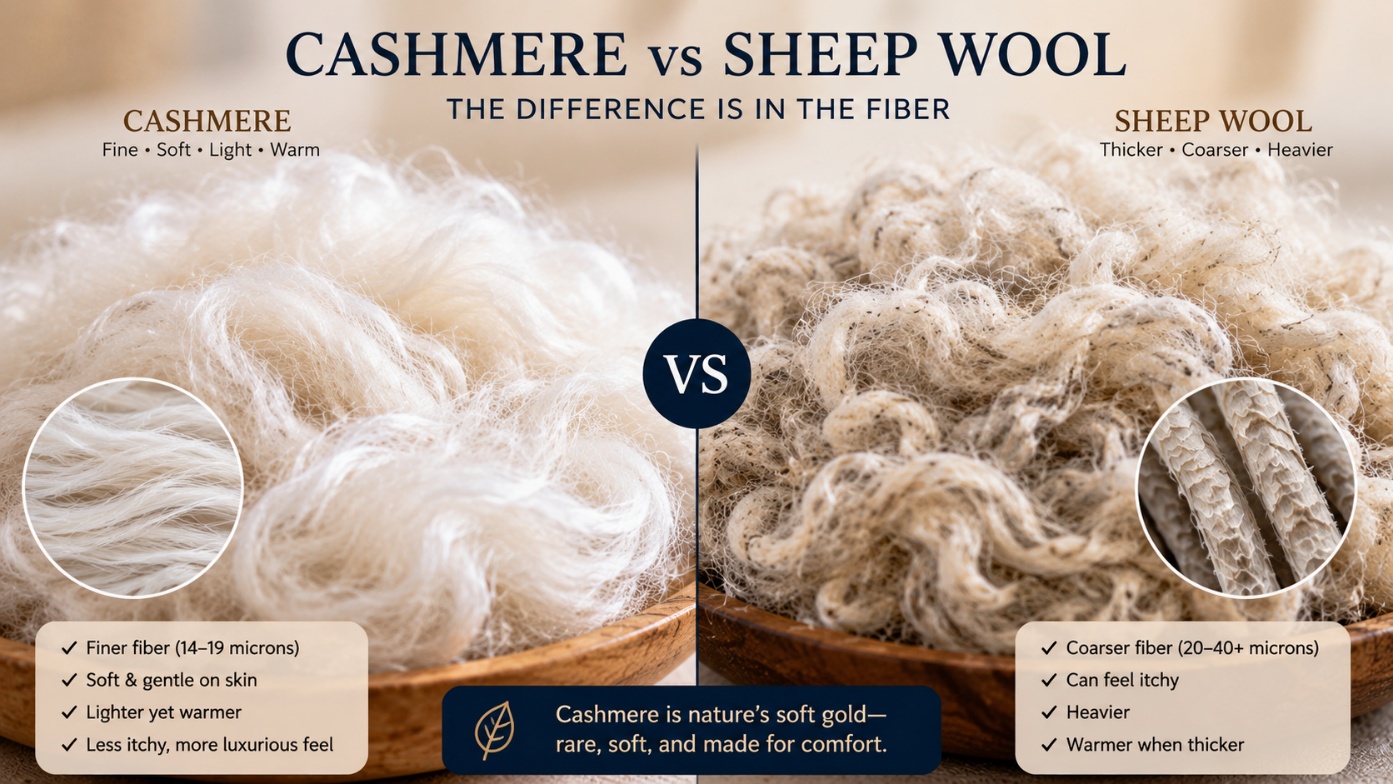
Common sheep wool can even be itchy at times as its strands can be sturdier and tougher. Cashmere tends to be more pleasant to be in direct contact, due to the fact that the fibers are not that hard and not that thick, thus bending without any difficulty. That being said, merino wool of high quality can be soft too, as well, and cashmere based low quality can pill or be lumpy when it is poorly made.
Why the Raw Material Matters
All cashmere products are based on the raw material. The best weaving or knitting cannot do away with bad fiber quality. The same fiber too coarse, or too short or watch mixed with too much ordinary wool will not feel the same luxurious way when finished.
The way to begin with a good cashmere product is to start with good under coats, de-hairing and proper yarn production. This is the reason why trusted sellers usually refer to fibre source, standard of purity and quality. The knowledge of the raw material will help buyers make informed decisions and shun the low-quality mixes being offered as high-end products.
How to Recognise Better Cashmere Raw Material
Customers are not always able to test fiber in a laboratory; there are indicators to indicate better raw material, however. Good cashmere typically is not slick. It must be warm/ light and not heavy/ rough. The surface is supposed to appear smooth and the cloth is expected to resume the form of its state once stretched.
Extremely low-priced cashmere can be shorter fibre or sheep wool or synthetic. These products can be soft initially but can become loose, pill or become coarse after use. Authentic premium cashmere is typically more well-balanced: warm, breathable, soft and durable when treated well.
Final Thoughts
Cashmere is produced out of that the fine undercoat of cashmere producing goats, more particularly the goats in the cold mountain climates. It is valuable because it is rare, soft and warm and because it takes skill to transform raw fiber into a finished product. With the Chyangra goat of Nepal to the Changthangi goat of Ladakh, the origin of the fiber adds a significant factor to quality.
Knowing What is cashmere made of assists customers look beneath the labels and marketing jargon. Authentic cashmere starts with the fineness of natural goat down, the amount of which is determined by the number of microns and the treatment accorded to the fiber. That is why, real cashmere remains to be called soft gold: unique, sophisticated and extremely comfortable.